Copyright @ 2023 www.digimitr.com. All rights reserved.

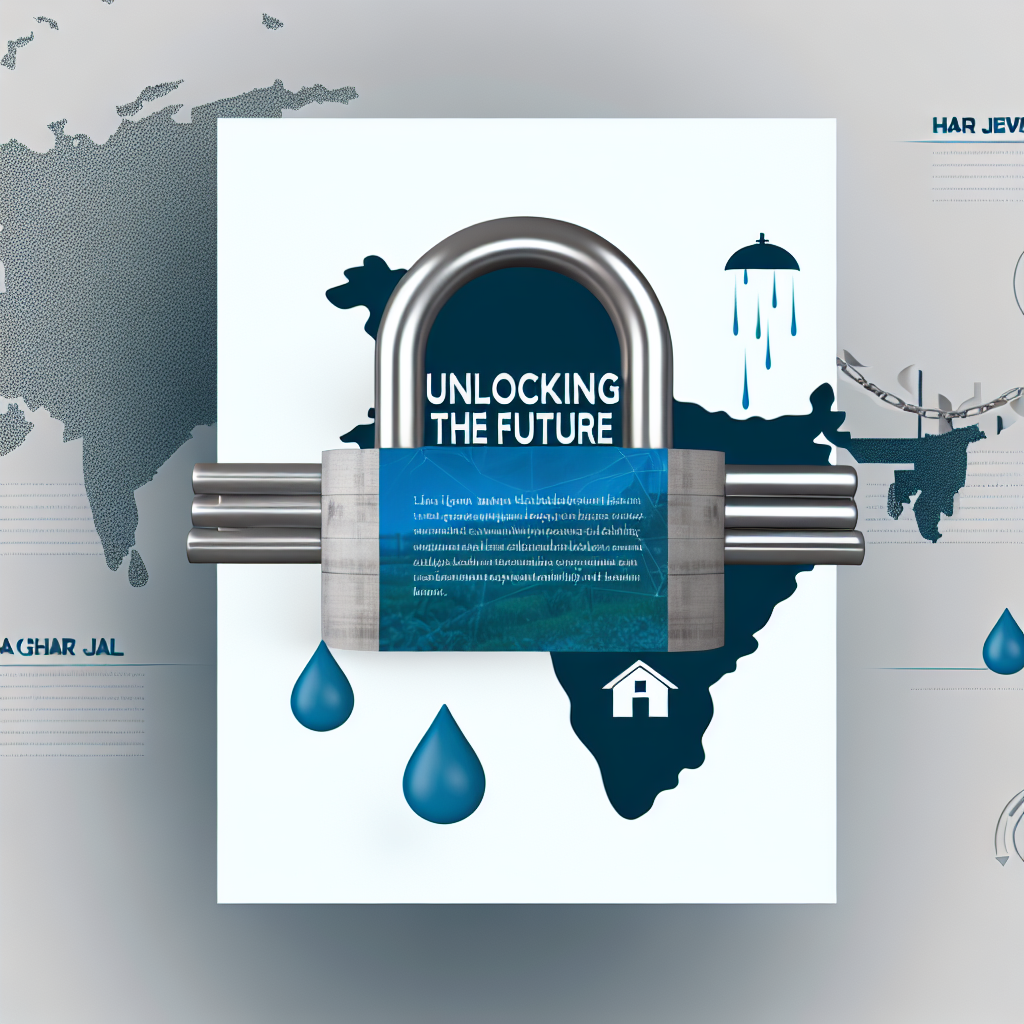
Unlocking the Future: How the Jal Jeevan Mission (JJM) is Ensuring ‘Har Ghar Jal’ Across India

Explore the key aspects of the government scheme titled “Unlocking the Future: How the Jal Jeevan Mission (JJM) is Ensuring ‘Har Ghar Jal’ Across India”. This program is overseen by the relevant ministry and focuses on delivering benefits to eligible beneficiaries.
Here is a comprehensive overview:
The Jal Jeevan Mission (JJM) is a transformative initiative launched by the Government of India in August 2019 with the aim of providing safe and adequate drinking water through individual household tap connections. This mission is grounded on the principle of ‘Har Ghar Jal’ (water for every household), reflecting the government’s commitment to ensuring universal access to water across rural areas in India. With a focus on sustainability and community participation, JJM not only seeks to address water scarcity but also enhances public health, gender equity, and economic prosperity.
Eligibility Criteria
The Jal Jeevan Mission primarily targets rural households that lack access to safe drinking water. The eligibility for receiving tap connections under JJM is determined by a variety of factors, which includes:
- Households residing in rural areas where existing water supply infrastructure is inadequate or non-existent.
- Priority is given to marginalized sections of society, including Scheduled Castes, Scheduled Tribes, and other vulnerable groups.
- Households without any existing piped water supply connections.
- Demonstrated community participation to ensure the sustainability of water supply systems.
Key Features and Benefits
JJM incorporates several vital features aimed at providing comprehensive solutions for water supply. One of the core benefits of this initiative is the establishment of sustainable water sources for rural populations. The mission emphasizes the importance of community participation and local governance, allowing village councils to play a significant role in managing water resources.
Key features include:
- Individual Household Tap Connections: The mission aims to provide tap connections to every rural household, significantly reducing the time and effort families, especially women and children, spend fetching water.
- Water Quality Monitoring: Ensuring water quality is paramount. The JJM involves regular testing and monitoring of water sources to meet safe drinking water standards.
- Community Ownership: The mission promotes community involvement in designing, implementing, and maintaining water supply systems, fostering a sense of ownership and responsibility among villagers.
- Skill Development: Through capacity-building initiatives, JJM empowers local people with the skills necessary for operating and maintaining water supply systems.
Application Process
Accessing the benefits of the Jal Jeevan Mission involves a structured application process. Rural households interested in obtaining a tap connection must typically follow these steps:
- Registration: Residents must apply through local Gram Panchayats or designated government bodies by submitting a request form.
- Verification: Local authorities verify the applications to ensure compliance with eligibility criteria.
- Approval: Once verified, applications are approved, and households are informed through official channels.
- Installation: The connection is installed by local water supply officials in coordination with the beneficiaries.
Funding and Budget
The Jal Jeevan Mission is supported by a substantial financial allocation from both the central and state governments. In its initial phases, the government set a target investment of approximately ₹3.60 lakh crore (around USD 48 billion) to achieve the desired outcomes by 2024. This financial backing covers not only infrastructure development but also capacity building and sustainability initiatives.
Funding is allocated on a cost-sharing basis, with the Union Government contributing a significant portion while states are encouraged to mobilize their resources. This joint funding mechanism ensures that local needs are addressed while maintaining accountability and transparency in resource utilization.
Achievements or Impact
Since its initiation, the Jal Jeevan Mission has made significant strides in improving access to drinking water across rural India. As of now, millions of households have been provided with tap connections, positively impacting health and livelihood. The mission also plays a crucial role in reducing the burden on women and children, who often had to travel long distances to fetch water.
Furthermore, enhanced access to clean water has led to improvements in education and employment opportunities in rural areas. Evidence suggests that with reliable water supply systems, schools have better attendance rates, as students are less likely to skip classes to collect water.
Challenges (if any)
Despite its commendable achievements, JJM faces several challenges that could hinder its objectives. Some of the primary challenges include:
- Infrastructure Gaps: Many rural areas still lack the necessary infrastructure to implement tap connections effectively.
- Community Engagement: Ensuring active community participation remains a challenge in some regions, affecting the sustainability of water supply systems.
- Water Quality Issues: In some instances, ensuring the quality of water through proper monitoring remains a significant concern.
Recent Updates
As of 2023, the Jal Jeevan Mission has introduced several recent updates aimed at enhancing its effectiveness. These include the implementation of new technology for real-time monitoring of water quality and distribution. The use of data analytics has enabled better planning and resource allocation, ensuring that water supply systems are responsive to the changing needs of communities.
Additionally, the government has initiated training programs for local self-governments to improve their capabilities in managing water resources effectively. These efforts reflect a commitment to adapt and evolve the mission to meet emerging challenges and requirements.
Conclusion
The Jal Jeevan Mission signifies a crucial step toward ensuring universal access to safe drinking water in rural India. Through its holistic approach, focusing on community participation and sustainable practices, JJM is laying a foundation for improved public health, economic development, and social equity. The mission’s comprehensive strategy not only addresses immediate water scarcity but also sets the stage for long-term sustainable growth, affirming the principle that water is indeed a precious resource deserving of concerted efforts toward its accessibility for all.
FAQ
What is the primary goal of the Jal Jeevan Mission?
The primary goal of the Jal Jeevan Mission is to provide functional household tap connections to every rural household in India, ensuring access to safe and adequate drinking water.
Who is eligible to apply for tap connections under JJM?
Eligibility is primarily aimed at rural households without any existing piped water supply connection, with priority given to marginalized and vulnerable communities.
How is the Jal Jeevan Mission funded?
The mission is funded through a combination of contributions from the central and state governments, with a significant financial investment aimed at supporting infrastructure development, capacity building, and community engagement initiatives.
For more information, check out official government site,
Official government website or relevant source not provided.
Stay updated on related schemes and initiatives using hashtags: #Unlocking #Future #Jal #Jeevan #Mission #JJM #Ensuring #Har #Ghar #Jal #India
Share your thoughts about this scheme in the comments below!