Copyright @ 2023 www.digimitr.com. All rights reserved.

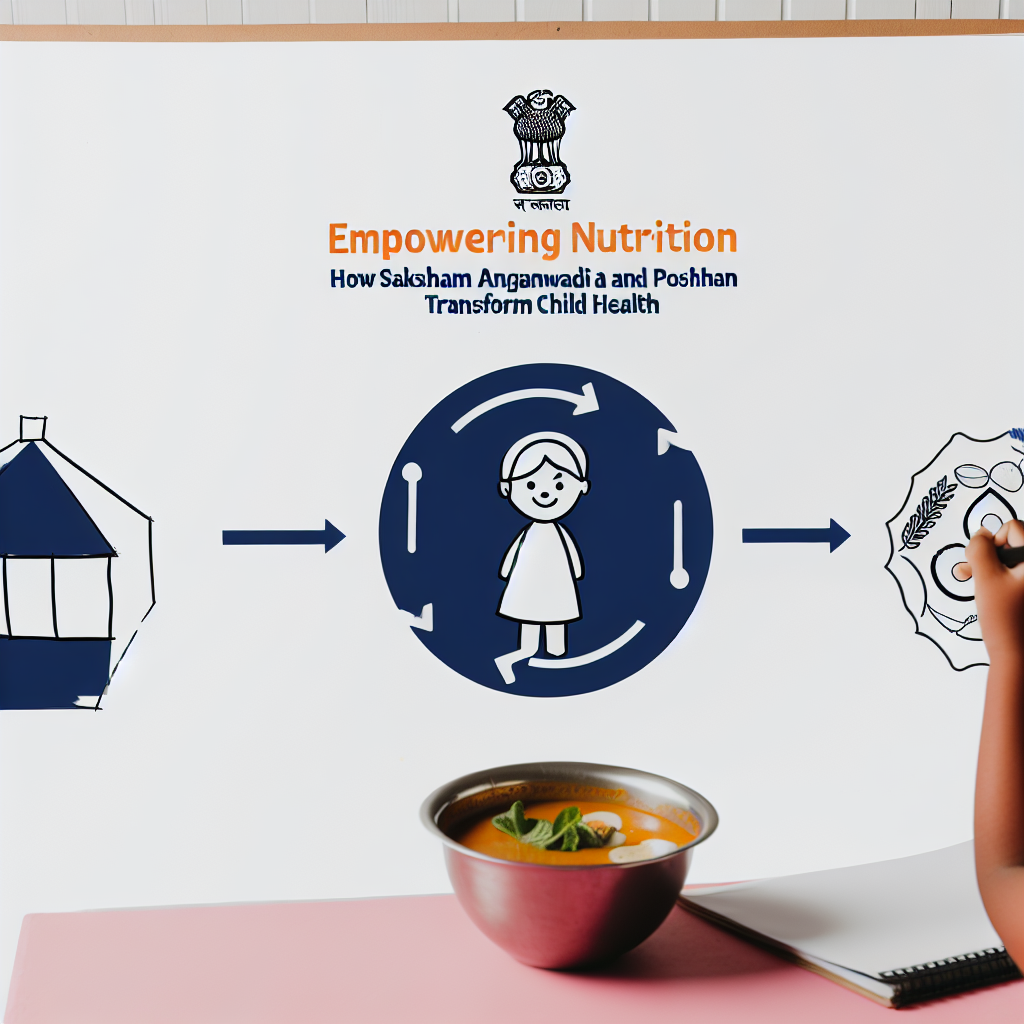
Empowering Nutrition: How Saksham Anganwadi and Mission Poshan 2.0 Transform Child Health in India

Explore the important features of the government scheme titled “Empowering Nutrition: How Saksham Anganwadi and Mission Poshan 2.0 Transform Child Health in India”. This initiative is managed by the relevant ministry and aims on providing benefits to eligible beneficiaries.
Here is a comprehensive overview:
Introduction
In India, child malnutrition remains one of the critical challenges that directly impact the health and development of millions of children. To combat this pressing issue, initiatives like Saksham Anganwadi and Mission Poshan 2.0 have been launched to transform child health through integrated approaches that focus not just on nutrition but also on health, education, and community participation. These programs represent a holistic approach toward improving the quality of life for children across the nation, particularly in underserved areas.
Eligibility Criteria
The Saksham Anganwadi and Mission Poshan 2.0 initiatives target diverse demographics, primarily focusing on children aged 0-6 years, pregnant women, and lactating mothers. Families below the poverty line, those experiencing food insecurity, and marginalized communities are typically prioritized for assistance. The eligibility for this program is determined by factors such as socioeconomic status, geographic location, and health conditions. Local Anganwadi centres play an essential role in identifying families who meet these criteria based on their specific needs.
Key Features and Benefits
Saksham Anganwadi aims to empower local Anganwadi workers with enhanced resources, training, and support. A key feature of this initiative is the adoption of technology to monitor and track health and nutrition outcomes effectively. For instance, mobile applications are being used to gather data, which informs targeted interventions and resource allocation.
Mission Poshan 2.0 complements these efforts by emphasizing a multi-sectoral approach that integrates nutrition, health education, sanitation, and hygiene. The program promotes community involvement, encouraging families to participate in nutritional education sessions. One of the most significant benefits is the shift from merely providing food supplements to educating families about balanced diets and sustainable food practices. This educational framework empowers caregivers to make informed dietary decisions, promoting long-term health benefits.
Application Process
For families seeking assistance through Saksham Anganwadi and Mission Poshan 2.0, the application process is designed to be straightforward and inclusive. Interested individuals can approach their nearest Anganwadi centre to fill out a registration form. The local Anganwadi worker will conduct a home visit to assess the family’s specific nutritional needs. Following the evaluation, eligible families are enrolled in the program and receive tailored support, including nutritional supplements, health check-ups, and educational resources. Continuous engagement and monitoring ensure that families remain informed and involved in their child’s nutritional journey.
Funding and Budget
The funding for Saksham Anganwadi and Mission Poshan 2.0 comes primarily from government allocations, with additional support from non-governmental organizations (NGOs) and international agencies. The central and state governments collaborate to establish a comprehensive budget that caters to the various aspects of child health and nutritional programs. Regular audits and evaluations are conducted to ensure accountability and optimize the utilization of resources to maximize impact.
The budget allocation is strategically divided among different components, such as food supplements, infrastructure development for Anganwadi centres, training programs for workers, and community mobilization activities. By focusing on these key areas, the government ensures a multi-dimensional approach that is capable of addressing the complex issues surrounding child malnutrition.
Achievements or Impact
Since the inception of Saksham Anganwadi and Mission Poshan 2.0, there have been significant achievements in combating child malnutrition. A notable impact has been a decrease in the prevalence of stunting, wasting, and anemia among children across various states. Enhanced engagement from community members has led to increased awareness about health and nutritional needs.
The programs have also successfully integrated local agricultural practices, whereby families are encouraged to grow their fruits and vegetables, fostering food sovereignty within communities. The positive ripple effects extend to education, as healthier children perform better in school and are more likely to succeed academically.
Challenges (if any)
Despite the promising outcomes, several challenges persist in the implementation of these programs. One of the primary challenges is the geographical diversity of India, which makes uniform implementation difficult. In rural and remote areas, access to healthcare services remains limited, and Anganwadi workers often face logistical challenges in delivering services.
Furthermore, the stigma surrounding malnutrition and inadequate awareness regarding dietary practices also hamper effective outreach. There are ongoing efforts to train Anganwadi workers to better communicate and engage with communities, but addressing these challenges requires sustained commitment from both the government and community stakeholders.
Recent Updates
Recent updates in these initiatives highlight a growing emphasis on sustainability and local customization of the programs. The government has introduced pilot projects that focus on integrating indigenous food sources into the nutritional supplement schemes, thus promoting local cuisines and dietary practices.
Additionally, advancements in technology have allowed data analytics to guide policy changes more effectively. The use of geographic information systems (GIS) enables better targeting of resources and interventions. Recent collaborations with NGOs have also led to innovative community-driven programs aimed at improving health outcomes through grassroots partnerships.
Conclusion
Saksham Anganwadi and Mission Poshan 2.0 collectively represent a significant stride toward revamping child health in India. By focusing on empowerment, awareness, and community involvement, these initiatives have laid a strong foundation for a healthier future for children. The journey is ongoing, but the progress made thus far provides hope and optimism that more children will receive the nutrition they deserve, paving the way for a healthier, more productive nation.
FAQ
1. What age group does Saksham Anganwadi target for nutritional support?
Saksham Anganwadi primarily targets children aged 0-6 years along with pregnant women and lactating mothers, aiming to improve their nutritional status and overall health.
2. How can families enroll in Mission Poshan 2.0?
Families can enroll by visiting their nearest Anganwadi centre to fill out a registration form. Anganwadi workers will assess eligibility and provide necessary support.
3. What challenges do these programs face in rural areas?
In rural areas, challenges include limited access to healthcare, logistical difficulties in service delivery, and a lack of awareness about nutritional practices, hindering effective outreach and impact.
For more information, check out official government site,
Official government website or relevant source not provided.
Stay updated on related schemes and initiatives using hashtags: #Empowering #Nutrition #Saksham #Anganwadi #Mission #Poshan #Transform #Child #Health #India
Feel free to share about this scheme in the comments below!